
Category: social work
Unheard, Uninformed, Uninvolved: The Reality of Child Participation in Welfare Services

Children involved in child welfare services (CWS) are often positioned as vulnerable individuals in need of protection. While the right to be heard is a fundamental aspect of child welfare policy, many young people receiving services find themselves excluded from the very decisions that shape their lives. This article explores the experiences of thirty-three young people in Nova Scotia, Canada, revealing a striking pattern of feeling unheard, uninformed, and uninvolved. Through qualitative research, it becomes clear that meaningful child participation is often an aspiration rather than a reality. The findings indicate that including young people in decision-making processes fosters trust, improves cooperation, and enhances well-being both during and after their time in care.
The concept of child participation is widely recognized in social work. The United Nations Convention on the Rights of the Child, which Canada ratified in 1991, guarantees children the right to be heard in matters that concern them. Despite this, child protection systems frequently emphasize safeguarding over empowerment. Social workers, bound by legal and procedural obligations, often view children as passive recipients rather than active participants. This perspective not only limits children’s agency but also exacerbates their sense of isolation and powerlessness within the system. Additionally, bureaucratic barriers, high caseloads, and risk-averse policies contribute to an environment where social workers prioritize procedural efficiency over meaningful engagement with young people.
One of the most prominent themes emerging from the study is that children feel unheard by their caseworkers and other professionals. Many young people report that, even when encouraged to share their concerns, their voices are dismissed or their experiences questioned. One participant, an eighteen-year-old male, described how he was invited to express himself but found that nothing changed as a result. Others recounted being outright accused of lying when attempting to discuss issues with their social workers, teachers, or therapists. This lack of trust and belief in their experiences led to growing resentment and detachment from the system meant to support them. The perception that social workers act as gatekeepers rather than advocates reinforces a cycle of disengagement, as children lose confidence in the system’s ability to address their concerns.
The problem extends beyond not being heard—many children are also uninformed about critical aspects of their care. Young people in the study frequently expressed frustration at being left out of key decisions, such as where they would live or when they could see their families. Some recounted experiences of being suddenly moved to new placements without prior notice or explanation. In extreme cases, young people were subjected to traumatic transitions, such as being taken into care without understanding the circumstances, placed in residential facilities without prior knowledge of what to expect, or having their case files lost due to administrative errors. The absence of clear communication left many feeling powerless and confused. This systemic failure to provide timely, accurate, and child-friendly information further alienates youth from their own case planning.
Feeling uninformed naturally leads to a broader sense of being uninvolved in one’s own life. Many participants in the study felt that they had little to no control over major decisions. Some reported being forced into therapy against their will, while others were pressured to accept adoption despite their objections. The lack of agency in these deeply personal decisions reinforced a feeling of helplessness, making them question whether their preferences and opinions mattered at all. This detachment not only impacts their emotional well-being but also their long-term ability to navigate adulthood successfully, as they are deprived of opportunities to develop critical decision-making skills.
Faced with these challenges, young people developed various coping strategies to regain a sense of control. Some withheld information from their caseworkers, providing only minimal details in an effort to protect themselves from perceived manipulation. Others adopted more overtly defiant tactics, such as pretending to cooperate with treatment plans in order to expedite their release from care. In extreme cases, some youth attempted to run away, seeing it as their only means of asserting autonomy over their lives. These coping mechanisms highlight a deeper systemic failure: when young people do not feel included in their own care, they resort to strategies that ultimately undermine their well-being and disrupt the very services meant to support them. The cycle of mistrust and disengagement only serves to reinforce negative outcomes, including homelessness, mental health struggles, and involvement with the justice system after aging out of care.
The study’s findings underscore a fundamental need for systemic change in child welfare services. Meaningful participation should not be an afterthought but an integral part of the care process. Social workers and policymakers must actively work to ensure that young people are consistently informed, consulted, and given genuine opportunities to shape the decisions that affect them. Training for caseworkers should emphasize the importance of treating children as active agents rather than passive subjects. Additionally, standardized guidelines should be implemented to guarantee that all children, regardless of their circumstances, are given a voice in their care. More accountability measures should also be put in place to ensure that professionals who neglect to involve youth in decision-making are held responsible for their actions. Furthermore, investing in independent advocates or youth advisory boards could offer additional support in ensuring that children’s perspectives are taken seriously.
This research highlights the stark contrast between the ideals of child participation and the lived realities of young people in the child welfare system. While policies exist to protect children’s rights, their implementation remains inconsistent. The voices of young people must be central to any reform efforts, ensuring that child welfare services not only safeguard their well-being but also empower them to take an active role in shaping their futures. Without deliberate and meaningful structural changes, the disempowerment experienced by young people in care will continue, perpetuating cycles of mistrust and disengagement that undermine the very goals child welfare services aim to achieve.
Decision-Making in Children and Families Social Work

Decision-making is a fundamental aspect of social work, particularly in the realm of children and family services, where practitioners are required to assess needs, risks, and service provisions within often complex and emotionally charged contexts. The process is influenced by a myriad of factors, including emotions, time, and the professional voice within the hierarchical and multi-disciplinary settings of social work. This article provides an exhaustive examination of decision-making within this field, drawing from an exploratory qualitative study that seeks to highlight the nuanced and multi-layered nature of social work practice. By focusing on the perspectives of both student and qualified practitioners, this study sheds light on the challenges, experiences, and insights that shape professional judgments and actions in child and family social work.
Decision-making in social work is a multi-faceted process that operates within legal, policy, and ethical frameworks. It involves negotiation, professional discretion, and the application of knowledge and evidence in real-world scenarios. The study at the heart of this analysis sought to explore the factors that inform decision-making among student and qualified practitioners, identifying key themes that influence how decisions are made and how professional voices are developed over time. A grounded theory approach was employed to analyze data gathered through focus groups consisting of practitioners at different stages of their careers, allowing for a comparative analysis of experiences across the professional spectrum.
One of the most significant findings of the study was the profound impact of emotions on decision-making. Social work, by its nature, is deeply relational and requires practitioners to engage with families and children who are often in distressing circumstances. Qualified practitioners demonstrated an ability to recognize and articulate their emotional responses, acknowledging the power and influence of their feelings on their decisions. They noted that emotions could lead them to advocate more passionately for certain clients or, conversely, comply more readily with managerial decisions based on negative perceptions. Student practitioners, on the other hand, expressed emotions more in relation to their own experiences, describing stress, anxiety, and the fear of making the wrong decision. This highlights the emotional labor involved in social work and underscores the need for reflective practice and supervision to help practitioners navigate these challenges effectively.
Time emerged as another crucial factor in the decision-making process. The passing of time was recognized as central to professional development, as student practitioners often felt overwhelmed by their lack of experience and sought reassurance that time would eventually bring greater confidence and expertise. For qualified practitioners, time played a role in both immediate decision-making—such as assessing risk and child protection concerns—and in long-term planning for children and families. Many practitioners expressed frustration with the bureaucratic nature of social work, which often limited their ability to follow cases through to their long-term outcomes, thus restricting opportunities for learning from past decisions. The significance of time in professional learning and in forming relationships with service users was also highlighted, emphasizing the tension between the need for timely interventions and the requirement for thorough, well-considered decision-making.
The concept of professional voice was another prominent theme that emerged from the study. Both student and qualified practitioners identified the challenges associated with having their voices heard within multi-disciplinary teams and hierarchical structures. Qualified practitioners noted that their voices were often overshadowed by those of legal and medical professionals, reflecting broader issues of power and status within inter-professional practice. Student practitioners, meanwhile, reported a sense of uncertainty regarding their own professional authority, often feeling that their perspectives were not taken seriously. This lack of confidence in their own voice was compounded by concerns about making mistakes and being held accountable for incorrect decisions. The study findings suggest that developing a strong professional voice is an essential aspect of professional growth and that support structures such as supervision and mentoring can play a crucial role in fostering this development.
The study contributes to existing literature on social work decision-making by reaffirming the complex interplay between rational decision-making models and the intuitive, relational, and emotionally driven aspects of practice. The findings align with previous research that emphasizes the role of organizational factors, managerial constraints, and bureaucratic pressures in shaping decision-making. They also highlight the need for greater recognition of the affective dimensions of practice, which are often overlooked in favor of procedural and evidence-based approaches. This underscores the importance of integrating critical reflection and emotional awareness into both social work education and professional practice.
A key implication of these findings is the need for structured opportunities for reflection and critical thinking within the profession. Supervision should be more than a procedural oversight; it should provide a safe space for practitioners to explore their emotional responses, develop confidence in their professional voice, and refine their decision-making skills. Additionally, social work education should incorporate models that acknowledge the transition from novice to expert, helping students to navigate the uncertainties of early practice and equipping them with the tools to manage the complexities of real-world social work.
The development of professional identity and confidence in decision-making is a process that unfolds over time. Student practitioners need to be supported in recognizing their capacity for informed decision-making, while qualified practitioners should be empowered to assert their expertise within inter-professional settings. Addressing the barriers to professional voice and ensuring that practitioners have the time and space to engage in meaningful reflection will enhance the quality of decision-making and ultimately improve outcomes for children and families.
In conclusion, decision-making in children and families social work is influenced by a multitude of factors, including emotions, time, and the ability to assert a professional voice. The findings of this study offer valuable insights into the lived experiences of practitioners at different career stages, highlighting the challenges and opportunities that shape their decision-making processes. By fostering reflective practice, providing supportive supervision, and acknowledging the complexities of social work, the profession can better equip its practitioners to make informed, ethical, and effective decisions. As social work continues to evolve, it is essential that these factors are given due consideration in both education and practice to ensure that practitioners are able to navigate the intricacies of their roles with confidence and competence.
The Care Act and Whole-Family Approaches
The Care Act 2014 represents a significant milestone in social care legislation in the UK, placing a legal obligation on local authorities to consider the broader context of an individual’s care needs. The Act introduces a whole-family approach, ensuring that care and support assessments take into account the impact on family members, particularly carers, including young carers and parent carers. This comprehensive guide explores the implementation of the Care Act in alignment with whole-family approaches, emphasizing the importance of integrating services for children and adults.
Introduction to Whole-Family Approaches in the Care Act
The Care Act 2014 aims to create a cohesive framework that allows local authorities to assess and support families holistically. It aligns with the Children and Families Act 2014 to promote a seamless approach to care and support. The integration of services helps prevent fragmented support and ensures that families receive the necessary assistance to maintain their well-being and quality of life.
A whole-family approach acknowledges that an individual’s needs do not exist in isolation. Instead, it considers the network of relationships surrounding the person, ensuring that the well-being of all family members, including children and carers, is safeguarded. This approach is embedded in the Act’s guiding principles, particularly the promotion of well-being and the prevention of needs arising for care and support. By taking a proactive stance, local authorities can reduce crises, improve support planning, and empower families to participate actively in the care process.
The Four Key Steps of Whole-Family Approaches
To implement whole-family approaches effectively, local authorities are encouraged to follow four key steps:
- Think Family – Recognizing that individuals exist within family networks and that their care needs impact those around them. Local authorities must integrate services and establish protocols for seamless coordination across departments. This includes multi-agency working, shared training initiatives, and joint assessment frameworks to ensure a truly holistic approach.
- Get the Whole Picture – Ensuring that assessments are comprehensive and consider the broader family context. This includes identifying young carers, parent carers, and extended family members who may be affected by an individual’s care needs. Local authorities should ensure that assessments capture all interdependent relationships, financial considerations, and the emotional burden carried by family members.
- Make a Plan That Works for Everyone – Developing care and support plans that are inclusive and consider the well-being of the entire family. This includes joint planning where appropriate and ensuring that carers have the support they need to sustain their roles. Local authorities should explore how technology, respite services, and financial aid can be integrated into care planning to enhance sustainability.
- Check It’s Working for the Whole Family – Regularly reviewing the impact of care and support plans to ensure they continue to meet the needs of all family members effectively. Reviews should include feedback loops, outcome-based assessments, and ongoing adjustments to ensure that evolving family dynamics and needs are addressed.
Key Practice Considerations for Local Authorities
In a local authority that effectively implements whole-family approaches:
- Leadership and commitment are demonstrated through coordinated services that span across social care, health, education, and other relevant agencies.
- Workforce development programs ensure that professionals are trained to recognize and respond to whole-family needs.
- Assessment processes incorporate family-related questions to understand the full extent of a person’s support network.
- Carers, including young carers, are identified early, and their needs are assessed alongside the individual requiring care.
- Families and carers play an active role in designing, delivering, and evaluating services to ensure their voices are heard and their needs are met.
- Effective inter-agency protocols enable a seamless transition for individuals moving between different levels of care.
Assessment and Whole-Family Considerations
Under the Care Act, assessments must be holistic and proportionate, considering both the individual’s needs and the impact on their family. Carers are now recognized in law, and their right to an assessment is independent of whether the individual they care for receives support. Key considerations include:
- Identifying carers and their willingness and ability to continue in their roles.
- Assessing young carers to determine if they are undertaking inappropriate levels of care.
- Recognizing mutual caring arrangements, such as elderly spouses supporting one another or adult children providing care for parents.
- Addressing risks to carers’ well-being and ensuring that they receive adequate support.
- Ensuring that assessment processes capture not just immediate care needs but also future considerations, such as anticipated deterioration, changing financial circumstances, and housing adaptations.
The assessment process must also consider whether a child in the family is a young carer and, if so, whether they should receive additional support under the Children Act 1989. Coordination between adult and children’s services is crucial to ensure that young carers do not take on excessive responsibilities that could impact their education, development, and well-being.
Care Planning and Whole-Family Approaches
Support planning must integrate the needs of all family members. This can be achieved by:
- Developing joint care plans where appropriate, ensuring that support is coordinated and not duplicated.
- Considering joint personal budgets for carers and individuals receiving care, maximizing efficiency and effectiveness.
- Identifying support networks and helping individuals and carers develop circles of support to enhance resilience and reduce social isolation.
- Ensuring that carers have access to breaks, respite care, and other forms of assistance to prevent burnout.
- Utilizing assistive technology and digital tools to enhance accessibility to care resources.
Reviewing Care Plans and Their Impact on Families
Regular reviews of care and support plans are essential to ensure they remain effective. Reviews should:
- Assess the impact of the plan on all family members, including unintended consequences.
- Identify any changes in circumstances that require adjustments to the plan.
- Ensure that young carers are not taking on inappropriate levels of responsibility.
- Evaluate whether carers are receiving sufficient support to maintain their own well-being.
- Incorporate family feedback to refine support mechanisms and improve service delivery.
Legal Responsibilities and Rights of Carers
The Care Act places a duty on local authorities to identify and support carers proactively. Carers’ eligibility for support is based on their needs and the impact of their caring role on their well-being. Key provisions include:
- The right to an assessment for all carers, regardless of the amount or type of care they provide.
- A duty to meet eligible needs, with local authorities providing appropriate support services.
- Consideration of carers’ employment, education, and personal well-being when determining support options.
- Recognition of young carers’ rights, ensuring they are supported appropriately and not left with excessive caring responsibilities.
Conclusion: Embedding Whole-Family Approaches in Social Care
The Care Act 2014 represents a shift towards a more integrated and holistic approach to social care. By implementing whole-family approaches, local authorities can ensure that individuals receive the support they need while also protecting the well-being of carers and family members. This approach promotes resilience, prevents crises, and fosters stronger, more supportive family networks.
Successful implementation requires commitment at all levels, from policymakers to frontline practitioners. By embedding whole-family approaches into assessment, planning, and review processes, social care services can create more sustainable and effective support systems that truly meet the needs of individuals and their families.
This Is Social Work

“This Is Social Work is a podcast from Social Work England, the specialist regulator for social work across England. Hosted by our very own regional engagement leads, we’ll be exploring the profession in more depth with a range of guests with lived and learned experiences of social work.”
Camberwell Assessment of Need for the Elderly
Forensic Social Work: Advancing Specialist Education and Practice

Forensic social work has emerged as a critical and highly specialized domain, responding to the intersections of social work, mental health, and legal systems. As societal challenges such as mental illness, criminal behavior, and systemic disadvantages intertwine, this field emphasizes the need for specialized education to prepare practitioners for its complexity. A case study from Australia, published in 2016, sheds light on this vital practice area by evaluating forensic social work education and its impact on professionals working within these contested spaces.
The practice of forensic social work is deeply rooted in addressing the needs of marginalized individuals. These populations often grapple with poverty, substance abuse, mental illness, and involvement with the legal system, reflecting broader societal inequities. This context has reshaped criminality narratives, moving beyond “bad conduct” to exploring environmental and psychological factors. This shift underscores the rising demand for social workers equipped to navigate the nexus of mental health and justice systems. Forensic social work is not limited to corrections or mental health institutions; its scope extends to child protection, disability services, and addiction rehabilitation, encompassing all fields requiring navigation of nonvoluntary systems.
The origins of forensic social work in Australia align with its emphasis on advocating for vulnerable populations. The field evolved from working with incarcerated individuals and juvenile delinquents to addressing broader psychosocial issues within legal frameworks. Practitioners assess risk, recommend rehabilitation, and advocate for client well-being in a legal context that often prioritizes control over empowerment. They challenge misconceptions that equate mental illness with criminality, advocating for nuanced understandings of risk and individual circumstances.
Specialized Education and Its Role in Forensic Practice
Education is a cornerstone in preparing social workers for the complexities of forensic practice. The Monash University Master of Social Work (Forensic Studies) program, introduced in 2010, offers a case study in bridging generic social work skills with forensic-specific knowledge. This graduate program equips social workers with a deep understanding of legal systems, risk assessment, and mental health frameworks. It emphasizes integrating social work values, such as individual dignity and self-determination, into the legal and mental health systems that often dominate forensic contexts.
Study participants—social workers employed by the Victorian Institute of Forensic Mental Health (Forensicare)—highlighted the unique demands of their roles. Forensicare provides services to mentally ill offenders in secure facilities and community settings, as well as assessments for courts. These practitioners stressed that their work requires a distinct skill set, blending traditional social work practices with an acute awareness of legal structures and mental health systems. Their roles often involve advocating for clients in adversarial environments, balancing the rights of individuals with community safety.
The findings revealed that forensic social workers consider their practice to be highly specialized due to its focus on legal issues, statutory guidelines, and the integration of mental health and criminal justice concerns. This specialization requires practitioners to address complex client needs, including stigma, marginalization, and systemic challenges. They must develop strong advocacy skills and maintain collaborative relationships with external agencies, all while navigating the constraints of legal and medical models.
Challenges and Skills in Forensic Social Work
Forensic social work is characterized by its focus on risk assessment, advocacy, and addressing the unique needs of clients. Practitioners must be adept at understanding the legal and psychological factors influencing their clients while maintaining a strengths-based perspective. Study participants emphasized the importance of recognizing clients’ individuality and respecting their voices, even in the context of significant constraints. This approach often contrasts with the deficit-focused models prevalent in legal and medical systems.
The practice of forensic social work is not without its challenges. Practitioners must navigate conflicting priorities, such as advocating for clients while addressing community safety concerns. They are also tasked with bridging gaps between different professional perspectives, such as those of lawyers and medical practitioners, to ensure holistic client care. Participants in the study noted that these challenges require a high level of specialized knowledge, particularly in areas such as mental health, substance abuse, trauma, and legal frameworks.
The Utility of Advanced Forensic Social Work Education
The Monash University program was widely praised for its ability to prepare social workers for the realities of forensic practice. Study participants highlighted the program’s focus on practical applications, such as risk assessment and case management, as well as its emphasis on interdisciplinary collaboration. They also identified areas for improvement, including greater attention to cultural competency, intellectual disabilities, and community development. These additions would enhance the program’s ability to address the diverse needs of forensic clients.
The introduction of specialized education programs like the Master of Social Work (Forensic Studies) marks a significant step forward in recognizing forensic social work as a distinct and essential practice area. These programs not only provide social workers with the tools they need to navigate complex systems but also elevate the profession by acknowledging the unique contributions of forensic practitioners.
Conclusion
The study underscores the critical role of forensic social work in addressing the intersections of mental health, criminal justice, and systemic inequities. It highlights the importance of specialized education in equipping practitioners to navigate these challenges while maintaining core social work values. As the demand for forensic social work continues to grow, the development of advanced educational programs will be essential in preparing social workers to advocate for vulnerable populations and influence systemic change.
The Paradox of Charity: How “Helping” Can Sustain the Stigmatization of Homeless People

The stigmatization of homeless individuals is deeply ingrained in society and, paradoxically, often perpetuated by the very institutions and initiatives designed to help them. This article, drawing from a comprehensive ethnographic study conducted in Łódź, Poland, by Małgorzata Kostrzyńska and Brian Littlechild, delves into the interplay between well-meaning charitable efforts and the reinforcement of negative stereotypes about homelessness. By exploring systemic failures and societal perceptions, it highlights how aid can unintentionally exacerbate the struggles of homeless individuals, transforming the act of “help” into a mechanism of further marginalization.
Theoretical Underpinnings of Stigma
This research is framed through Erving Goffman’s stigma theory, which posits that stigma arises when individuals deviate from societal norms and are subsequently “tainted” in the eyes of others. Homelessness, according to this theory, is not merely a material condition but a social construct shaped by labeling, stereotyping, and societal expectations. Stigmatization of homeless individuals often manifests through assumptions of personal failure, laziness, or moral inadequacy. These stigmas are further reinforced by charitable practices that objectify the homeless, positioning them as passive recipients of aid rather than active agents of their own lives.
In line with Goffman’s concept of the “discredited” and “discreditable,” homeless individuals are often categorized based on whether their homelessness is immediately visible or concealed. This binary contributes to the social mechanisms of exclusion, as the act of seeking help often forces individuals to publicly disclose their homelessness, thereby subjecting themselves to judgment and further stigmatization.
Systemic and Structural Stigmatization in Aid Practices
One of the core findings of the study is how systemic structures of aid are often designed based on stereotypical perceptions of homelessness, which, instead of empowering recipients, exacerbate their stigma. The research identifies multiple dimensions of such stigmatizing practices:
- Aid Designed on the Basis of Stigma
Many interventions rely on the assumption that homeless individuals are inherently deceitful or manipulative, leading to practices such as the use of informers within shelters. Managers and social workers encourage residents to report on one another to determine eligibility for aid or compliance with shelter rules. This strategy fosters mistrust among residents and perpetuates a degrading environment, where individuals feel surveilled and dehumanized. - Provision of Inferior Goods and Services
Homeless individuals often receive aid that is visibly of lower quality, reinforcing their marginalized status. Participants in the study described receiving expired food, damaged clothing, or supplies that were unsuitable for their needs. The process of distributing such items often involves humiliating rituals, such as queuing for discarded bread or being treated as “second-class citizens.” These experiences strip individuals of dignity and deepen their feelings of exclusion. - Segregation and Hierarchies Among Aid Recipients
Aid programs often create internal hierarchies among homeless populations. For example, some individuals are given priority based on arbitrary qualifications such as possession of government-issued coupons, while others are relegated to secondary queues. This segregation exacerbates tensions within the homeless community and underscores the dehumanizing nature of these interventions. - Aid Enhancing Visibility of Stigma
Certain forms of aid make the stigma of homelessness more visible to society, thus intensifying its impact. For instance, social welfare cards with conspicuous labels or restrictions on where benefits can be used signal the recipient’s dependence on aid. Such measures not only limit individual autonomy but also serve as a public marker of their marginalized status, leading to social alienation.
Apparent Aid: A False Sense of Support
The study also critiques “apparent aid,” which refers to well-intentioned but ineffective measures that fail to address the root causes of homelessness. These efforts often prioritize appearances over substance, creating an illusion of support without producing meaningful outcomes. Examples include:
- Misguided Donations
Participants reported receiving items such as women’s clothing or children’s shoes, which were entirely unsuitable for their needs. The refusal to accept such donations often led to accusations of ingratitude, further alienating recipients. - Provisional and Seasonal Support
Much of the aid provided to homeless individuals is temporary, addressing immediate survival needs but neglecting long-term solutions. For instance, shelters may relax restrictions during winter months to prevent fatalities but revert to rigid policies thereafter, leaving many without support. This episodic approach undermines efforts to achieve lasting stability. - “Spoiling” Aid
Over-reliance on charitable handouts, such as free meals and clothing, fosters a culture of dependency and diminishes the motivation to pursue independence. This phenomenon, referred to as “spoiling” by study participants, underscores the need for aid to be both empowering and sustainable.
The Intersection of Neoliberalism and Stigma
The research situates these practices within the broader ideological framework of neoliberalism, which emphasizes individual responsibility and self-reliance. This ideology often shifts the blame for homelessness onto individuals, portraying them as “undeserving” of support unless they conform to societal norms of productivity and behavior. Such narratives not only reinforce stigma but also shape the policies and practices of aid organizations, perpetuating a cycle of marginalization.
Neoliberal discourse also influences the attitudes of aid providers, who may adopt a paternalistic approach that undermines the autonomy of homeless individuals. By framing support as a form of charity rather than a societal responsibility, these practices obscure the structural factors contributing to homelessness, such as inadequate housing policies, unemployment, and systemic inequality.
Toward a Transformative Approach to Aid
To address the shortcomings of current practices, the study advocates for a paradigm shift in how aid is conceptualized and delivered. This involves:
- Partnership-Based Support
Aid must move away from asymmetrical relationships where the helper wields authority over the recipient. Instead, support should be grounded in partnership, where homeless individuals are treated as experts of their own lives and included in the decision-making process. - Empowering Interventions
Aid should focus on enhancing the self-determination of recipients, providing them with the tools and opportunities to achieve independence. This includes offering housing-first initiatives, vocational training, and access to mental health services. - Challenging Societal Perceptions
Efforts to combat homelessness must also address the societal attitudes that perpetuate stigma. Public awareness campaigns, education programs, and inclusive policies can help dismantle stereotypes and promote empathy. - Systemic Reforms
Ultimately, the fight against homelessness requires systemic changes that address its root causes. This includes investing in affordable housing, reforming social welfare policies, and tackling income inequality. Without these measures, charity alone will remain insufficient.
Conclusion
The paradox of charity lies in its potential to harm those it aims to help. As this study demonstrates, well-meaning interventions often sustain the stigmatization of homeless individuals by reinforcing negative stereotypes and perpetuating dependency. Addressing this issue requires a holistic approach that combines systemic reforms with a commitment to empowering those in need. By dismantling the structural and ideological foundations of stigma, society can move closer to a future where homelessness is not merely managed but eradicated. In this vision, the ultimate goal of aid is not to perpetuate dependency but to render itself unnecessary, enabling individuals to reclaim their dignity and autonomy.
Reflective Journaling in Social Work Education: A Pathway to Professional Identity Development

The cultivation of a professional identity among social work students represents a critical aspect of their educational journey, one that extends beyond the acquisition of theoretical knowledge and practical skills. It involves a deep, introspective process that integrates personal values, experiences, and beliefs with the core principles of the social work profession. In this context, reflective journaling emerges as a transformative pedagogical tool, enabling students to bridge the gap between personal introspection and professional practice. Einav Segev’s qualitative phenomenological study, conducted with final-year Israeli undergraduate social work students, delves into the multifaceted role of journaling in fostering this professional identity. Through thematic analysis of the students’ reflective journals, the study uncovers the profound ways in which journaling shapes their professional development, providing invaluable insights into its pedagogical significance.
Social work education is designed to prepare students for the complexities of professional practice, equipping them with the ability to navigate interpersonal relationships, address societal inequities, and advocate for vulnerable populations. This preparation necessitates not only the transmission of knowledge and skills but also the cultivation of self-awareness, critical thinking, and reflective capacities. Reflective journaling, as highlighted in Segev’s study, serves as a pivotal medium for this transformative learning process. Despite the extensive literature documenting the benefits of journaling in educational contexts, its specific role in shaping the professional identity of social work students has received comparatively less attention. Segev’s research addresses this gap, focusing on how journaling facilitates the integration of personal experiences with professional knowledge, the internalization of social work values, and the emotional processing essential for effective practice.
At the core of Segev’s findings is the observation that journaling allows students to use their personal experiences as a foundation for constructing their professional identities. This process involves a dynamic interplay between personal and professional dimensions, wherein students reflect on their own life experiences and relate them to the challenges and scenarios they encounter in their training. For instance, students often drew parallels between their personal relationships and their interactions with clients, using these insights to develop empathy and a deeper understanding of their clients’ perspectives. One participant reflected on her experience of ambivalence in her personal relationships, noting how it enabled her to connect with clients facing similar struggles. Such reflections underscore the transformative potential of journaling, as students begin to see their personal narratives not as separate from but as integral to their professional growth.
This integration of personal and professional realms aligns with transformative learning theory, which posits that critical reflection on prior assumptions and experiences fosters profound changes in perspective. Journaling provides a structured yet flexible space for students to engage in this reflective process, allowing them to reconcile their past experiences with their emerging professional identities. For example, students who had previously been clients in therapeutic settings often wrote about how these experiences shaped their understanding of the therapeutic process, enhancing their ability to empathize with and support their future clients. This reflective practice not only deepened their self-awareness but also reinforced their commitment to the principles of social work, such as compassion, respect for diversity, and the pursuit of social justice.
Another significant theme identified in Segev’s study is the role of journaling in helping students acquire and internalize professional concepts and skills. Social work education often emphasizes the importance of linking theoretical knowledge to practical application, a process that can be challenging for students navigating the complexities of fieldwork. Journaling facilitates this connection by providing a platform for students to reflect on the theories and techniques introduced in their coursework and to consider how these can be applied in real-world contexts. Many students described how writing in their journals helped them clarify abstract concepts, such as motivational interviewing or the use of metaphors in therapy, and adapt these to their practical experiences. One student wrote about how the principle of “flowing with resistance” resonated with her, enabling her to approach client interactions with greater empathy and flexibility.
In addition to fostering the integration of theory and practice, journaling serves as a retrospective tool for professional reflection. Segev’s study highlights how students used their journals to revisit past professional encounters, particularly those that had been challenging or emotionally taxing. This retrospective reflection allowed them to gain new insights into their actions, identify areas for improvement, and derive valuable lessons for future practice. For instance, one participant described how revisiting a past client interaction helped her recognize missed opportunities for intervention and develop a more nuanced understanding of the client’s behavior. Such reflections not only enhanced the students’ critical thinking skills but also instilled a sense of professional growth and self-compassion. By acknowledging and learning from their mistakes, students were able to view these experiences as integral to their development as competent and reflective practitioners.
The emotional dimension of journaling, as revealed in Segev’s study, is perhaps its most profound and transformative aspect. Journaling provides a safe and resonant space for students to process the intense emotions that often accompany their education and training. Many participants described their journals as a “mirror,” reflecting their internal struggles, fears, and aspirations. This safe space allowed them to articulate and explore feelings that might have been difficult to express in other contexts, such as the classroom or supervision sessions. For example, one student wrote about the overwhelming emotions she experienced during a classroom exercise, how journaling helped her process these feelings and regain her sense of balance. Others used their journals to confront self-doubt and fear, finding solace and encouragement in the act of writing.
The therapeutic potential of journaling is further exemplified by its role in fostering self-awareness and emotional resilience. As students reflected on their experiences, they gained a deeper understanding of their emotional responses and the factors influencing their behavior. This self-awareness, in turn, enabled them to develop strategies for managing stress and maintaining their well-being, both of which are crucial for sustaining a career in social work. One participant eloquently described journaling as “solving a jigsaw puzzle,” a process of piecing together fragments of personal and professional experiences to create a coherent and meaningful whole. Through this process, students not only prepared themselves for the emotional demands of social work but also cultivated a sense of agency and confidence in their ability to navigate these challenges.
The implications of Segev’s findings for social work education are far-reaching. By incorporating reflective journaling into the curriculum, educators can create a supportive and transformative learning environment that fosters the holistic development of their students. Journaling serves as a bridge between academic learning and professional practice, enabling students to integrate theoretical knowledge with practical skills, reflect on their personal and professional experiences, and develop the emotional resilience necessary for effective practice. Moreover, journaling encourages students to take ownership of their learning, positioning them as active participants in their professional development rather than passive recipients of knowledge.
However, Segev’s study also highlights several limitations and areas for further research. The study’s focus on a single course and its reliance on a relatively small and culturally homogeneous sample of participants suggest the need for broader investigations into the role of journaling in social work education. Future research could explore the experiences of students from diverse cultural backgrounds and educational contexts, as well as the long-term impact of journaling on their professional identity and practice. Additionally, integrating other research methods, such as interviews and focus groups, could provide a more comprehensive understanding of the benefits and challenges associated with journaling.
In conclusion, reflective journaling emerges from Segev’s study as a powerful and multifaceted tool for social work education. By facilitating the integration of personal experiences with professional knowledge, fostering the internalization of social work values, and providing a safe space for emotional processing, journaling supports students in their journey toward becoming compassionate, competent, and reflective practitioners. As the challenges facing the social work profession continue to evolve, the importance of cultivating such qualities in future practitioners cannot be overstated. Through the simple yet profound act of writing, social work students can embark on a transformative journey of self-discovery and professional growth, preparing them to meet the demands of their field with empathy, resilience, and confidence.
Threshold Decisions in Social Work: Exploring Theory to Enhance Practice

Decision-making forms a cornerstone of social work, often defined by its complexity and the necessity to navigate incomplete or conflicting information. Social workers frequently face the challenge of determining whether a situation demands intervention or meets criteria for service provision. These critical moments of judgment, often referred to as “threshold decisions,” require an intricate balancing of evidence, context, and professional judgment. This article explores the concept of threshold decisions in social work, using theoretical frameworks to deepen understanding and improve practice.
At its core, a threshold decision is a binary judgment, determining whether a case crosses a predefined line or level, such as the need for protective intervention or eligibility for services. These judgments are rarely made in isolation; they form part of a broader assessment process that involves gathering information, interpreting evidence, and aligning actions with legislative, policy, and cultural standards. The stakes are high, as these decisions often have life-altering implications for individuals, families, and communities. Transparency and consistency are crucial, ensuring accountability and fostering public trust.
Common examples of decision making at a threshold in social work are such as:
- compulsory intervention regarding child protection or safeguarding vulnerable adults;
- mental health emergencies and risk levels;
- eligibility for a support service, and managing needs or risk within services;
- need or risk factors on discharge from hospital;
- criminal justice decisions regarding prison discharge or risk;
- whether or not to offer a (non-mandatory) protective service;
- whether action is required by the service regulator in relation to standards of practice;
- entry into and transfers between services.
Threshold judgments are deeply influenced by shifting societal norms, political pressures, and resource constraints. For instance, in child welfare, the concept of “significant harm” hinges on subjective interpretations of “good enough parenting,” which vary across cultures and contexts. Similarly, in other areas like mental health or elder care, decisions are shaped by dynamic definitions of risk and need. The variability and subjectivity inherent in these decisions highlight the need for theoretical frameworks that provide clarity and structure.
Two key theoretical models illuminate the decision-making process in social work: signal detection theory and evidence accumulation theory. Signal detection theory, initially applied in fields like psychology and medicine, helps practitioners distinguish meaningful “signals” from background “noise.” In social work, this might involve identifying indicators of child abuse amidst a plethora of unrelated information. The theory emphasizes that thresholds are not static; they are influenced by individual and organizational factors, including past experiences, values, and societal expectations. Evidence accumulation theory, on the other hand, conceptualizes decision-making as a process of gathering and evaluating information until a “tipping point” is reached. This approach underscores the cumulative nature of risk assessment, where new evidence can shift the balance and trigger action.
While these models provide valuable insights, they do not fully address the sense-making process that underpins threshold judgments. Naturalistic decision-making (NDM) and heuristic approaches offer complementary perspectives. NDM focuses on how practitioners make decisions in real-world contexts characterized by complexity, time pressure, and high stakes. It emphasizes the role of intuition, experience, and mental shortcuts in navigating uncertainty. Heuristic models, derived from the concept of bounded rationality, highlight the use of simple rules or cognitive shortcuts to manage information overload and make efficient decisions. These approaches recognize the human element in decision-making, acknowledging both its strengths and vulnerabilities.
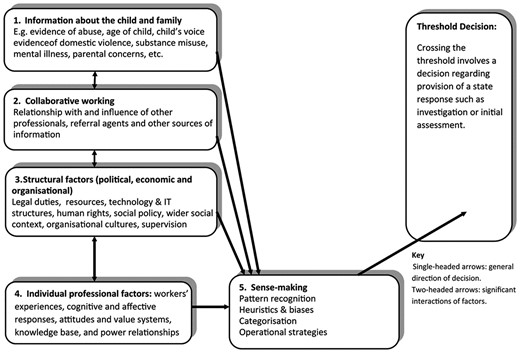
The interplay between these models reveals the multifaceted nature of threshold decisions. Signal detection and evidence accumulation theories provide a foundation for understanding how evidence is evaluated, while NDM and heuristic approaches offer insights into the cognitive and contextual factors that shape judgments. Integrating these perspectives can enhance our understanding of social work practice, enabling practitioners to navigate the complexities of threshold decisions with greater confidence and effectiveness.
The implications for practice are significant. Understanding the theoretical underpinnings of threshold decisions can improve the transparency and defensibility of judgments, fostering greater accountability and public trust. It also highlights the importance of continuous professional development, enabling social workers to refine their decision-making skills through reflection and learning. Moreover, the integration of theory into practice can inform the development of decision-support tools and training programs, enhancing the overall quality of social work services.
In conclusion, threshold decisions in social work represent a critical juncture where evidence, judgment, and context converge. By exploring theoretical frameworks such as signal detection theory, evidence accumulation theory, NDM, and heuristics, this article provides a comprehensive understanding of these decisions and their implications for practice. As social work continues to evolve in response to societal and technological changes, these insights offer a valuable foundation for advancing professional judgment and improving outcomes for those served by the profession.
 Beyond Barriers